

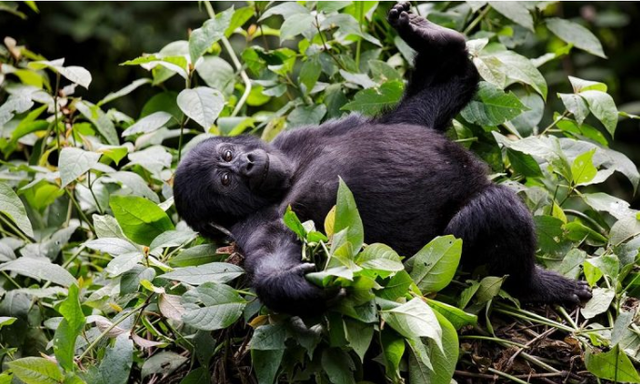

There are moments in travel that divide your life into before and after. Standing three meters from a mountain gorilla in the mist-wrapped forests of the Congo is one of them.
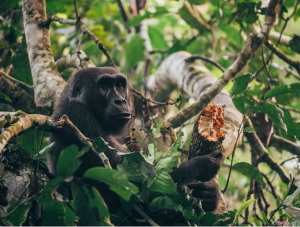
No photograph prepares you for it. No documentary quite captures the weight of the moment — the sheer physical presence of a 200-kilogram silverback, the extraordinary intelligence in his eyes, the casual power in every movement as he shifts his enormous frame and regards you with something between indifference and curiosity. Around him, his family moves through the undergrowth: juveniles tumbling over one another, a mother nursing her infant, a young male watching from a tree branch overhead. And you stand there, breathless, aware that you are in the presence of one of the closest living relatives of our own species — and one of the rarest animals on Earth.
Gorilla trekking in Congo and Kenya safaris Africa is the pinnacle of African wildlife travel. It is not easy, not cheap, and not for the passive traveler. But for those who commit to the journey, it delivers something that virtually no other wildlife can experience: genuine, unmediated contact with a wild creature of profound intelligence, in the last great forest on Earth.
This guide covers everything you need to know — where to go, how to prepare, what to expect on the trail, and how to ensure your visit contributes to the survival of the very animals you have come to see.
The Gorillas of the Congo: An Overview
Two gorilla subspecies call the Congo home, and they offer distinctly different trekking experiences.
Mountain Gorillas (Gorilla beringei beringei)
Mountain gorilla trekking in Congo is the rarest of all gorilla subspecies. With a global population of fewer than 1,100 individuals, every single mountain gorilla on Earth lives within a narrow range spanning the Virunga Massif — a chain of volcanic mountains straddling the borders of the DRC, Rwanda, and Uganda — and Uganda’s Bwindi Impenetrable Forest.
In the DRC, mountain gorilla trekking is conducted exclusively through Virunga National Park, Africa’s oldest national park. Virunga currently has multiple habituated gorilla families available for trekking, each accessible from ranger stations within the park. The trekking experience here is raw and physically demanding, set against a volcanic landscape of extraordinary dramatic power.
Mountain gorillas are larger than their western lowland cousins, with longer, thicker fur adapted to the cool temperatures of high-altitude montane forest. Adult male silverbacks can weigh up to 220 kilograms and stand nearly two meters tall when upright.
Western Lowland Gorillas (Gorilla gorilla gorilla)
Western lowland gorillas inhabit the dense equatorial forests of Central and West Africa. While their total population is larger than that of mountain gorillas, they are critically endangered and have declined sharply due to poaching, habitat destruction, and disease — particularly Ebola outbreaks that have devastated some populations.
In the Congo, western lowland gorilla trekking is centred in Odzala-Kokoua National Park and Nouabalé-Ndoki National Park in the Republic of Congo (Congo-Brazzaville). These parks harbour some of the most well-studied habituated gorilla groups in Africa, and the trekking experiences they offer are among the finest available for this subspecies anywhere in the world.
Western lowland gorillas are smaller and more lightly built than mountain gorillas, with shorter fur and a broader geographic range. Their forest habitat — flat, dense, humid lowland rainforest — creates a different trekking environment from Virunga’s volcanic slopes.
Where to Trek: The Congo’s Premier Gorilla Destinations
Virunga National Park, DRC
Established in 1925, Virunga is Africa’s oldest national park and, for mountain gorilla trekking in Congo, the most dramatic setting on Earth. The park’s gorilla sector occupies steep volcanic forest on the flanks of the Virunga volcanoes, and the landscape — misty, primeval, and geologically alive — adds a dimension to the trekking experience that is impossible to replicate elsewhere.
Virunga operates multiple habituated gorilla families across different sectors of the park, accessible from ranger stations that serve as trekking departure points. Treks begin at dawn after a briefing from park rangers covering regulations, health protocols, and gorilla behavior. Group sizes are capped at eight visitors per family per day, a limit that is absolute and non-negotiable.
The permitted time with the gorillas is one hour. In practice, this hour passes faster than any other in your life.
Beyond the gorilla experience itself, Virunga offers an unmatched depth of additional wildlife and landscape — including chimpanzee habituation experiences, hippo walks along the Rwindi River, tree-climbing lions (one of only a handful of populations in Africa that have developed this behavior), and the iconic Mount Nyiragongo volcano trek.
Virunga’s ranger force — over 700 strong, operating in conditions of genuine personal risk — is the reason these gorillas have survived. Permit revenues directly fund ranger salaries, equipment, and operations.
Odzala-Kokoua National Park, Republic of Congo
Odzala-Kokoua offers the finest western lowland gorilla trekking experience in Africa. The park’s habituated gorilla groups have been followed by researchers and trackers for decades, and the depth of behavioral understanding built up over those years translates directly into richer, more contextualised visitor experiences.
Two intimate luxury camps — Ngaga Camp and Lango Camp — serve as bases for gorilla trekking and broader forest exploration. Ngaga Camp, located in primary forest at the heart of gorilla territory, specializes in gorilla tracking in Congo, with expert Congolese trackers leading daily walks to locate habituated families. The trackers’ knowledge of individual gorillas — their personalities, family relationships, and ranging patterns — gives the experience a narrative depth that goes far beyond a simple wildlife encounter.
The park’s bias (natural forest clearings) add a spectacular complement to the gorilla trekking in Congo. From elevated platforms overlooking Lango Bai, visitors watch western lowland gorillas interact with forest elephants and buffalo in open clearings — a wildlife spectacle entirely unique to the Congo Basin.
Nouabalé-Ndoki National Park, Republic of Congo
A UNESCO World Heritage Site managed in partnership with the Wildlife Conservation Society, Nouabalé-Ndoki is among the most scientifically significant gorilla habitats on Earth. Research conducted here over four decades has fundamentally shaped our understanding of western lowland gorilla behavior, ecology, and social structure.
Gorilla trekking Uganda and Nouabalé-Ndoki is conducted within a framework of genuine scientific rigor, and visitors benefit from levels of behavioral insight unavailable elsewhere. The park’s remoteness — accessible only by small aircraft from Brazzaville — ensures an exclusivity of experience that is increasingly rare in African wildlife travel.
What to Expect on a Gorilla Trek
The Pre-Trek Briefing
Every gorilla trekking in Congo begins with a mandatory briefing led by park rangers or senior guides. The briefing covers the rules that govern all gorilla encounters: maintaining a minimum distance of seven meters from the gorillas at all times, not trekking if you have a respiratory illness (gorillas are highly susceptible to human diseases), keeping voices low, not using flash photography, and following all guide instructions immediately and without question. These rules exist to protect the gorillas, and they are enforced absolutely.
The Trek Itself
Treks begin at dawn to maximize time in the forest during the gorillas’ most active periods. Groups are led by a senior guide and accompanied by park rangers carrying radio communication equipment and, in areas with security considerations, armed escorts.
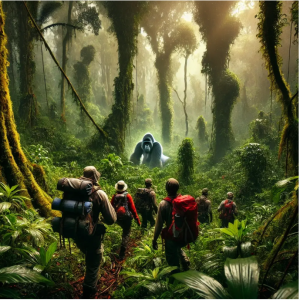
Trackers — often working since before dawn — maintain radio contact with the guide, reporting the gorilla family’s location. The walk to the gorillas can range from 30 minutes to six hours or more, depending on how far the family has ranged overnight. This variability is part of the authenticity of the experience: you are following wild animals through their actual habitat, not visiting a managed enclosure.
Terrain varies significantly by destination. In Virunga, expect steep volcanic slopes, dense vegetation, and potentially muddy, slippery trails after rain. In Odzala and Nouabalé-Ndoki, the terrain is flatter but the undergrowth is dense and the humidity intense.
The Encounter
When the guide signals that you are close, the group slows and quiets. The final approach is made carefully, crouching through undergrowth, until the gorillas come into view. The one-hour timer begins the moment the first gorilla is sighted.
Behaviour during the hour varies between visits. Some families are deeply relaxed and feed and rest nearby throughout. Others move more actively, and the group must move with them. Young gorillas are frequently curious and will approach closer than the seven-meter limit — in these moments, guides instruct visitors to remain still and to avert their eyes, as direct eye contact can be interpreted as a challenge by adults.
Silverbacks occasionally perform partial displays — standing upright, beating their chests, or making short charges — particularly if they feel the group is too close or if there is tension within the family. Guides manage these moments with practiced calm, and serious incidents are exceptionally rare in properly managed programs.
When the hour ends, the group withdraws quietly from the gorilla family and begins the return walk.
Responsible Trekking: The Ethics and the Impact
Gorilla trekking in Congo and Tanzania safari, when properly managed, is widely recognised by conservation scientists as a positive force for gorilla survival. The logic is straightforward: permit revenues fund rangers, rangers protect gorillas from poachers, and communities that benefit economically from gorilla tourism have a direct stake in their survival.
The numbers bear this out. Mountain gorilla populations have grown steadily over the past two decades — from approximately 620 individuals in 2000 to over 1,100 today — during the same period that tourism has expanded. This is one of the very few cases in African conservation where a critically endangered species has actually increased in number.
Responsible trekking means following all health protocols without exception, choosing operators who employ local guides and contribute to community programs, respecting all behavioral guidelines during the encounter, and being honest about your own health status before trekking.
Key Takeaways
- Two gorilla subspecies are accessible in the Congo: mountain gorillas in Virunga (DRC) and western lowland gorillas in Odzala-Kokoua and Nouabalé-Ndoki (Republic of Congo), each offering a distinct and extraordinary trekking experience.
- Permits are strictly limited and sell out early: gorilla trekking groups are capped at eight visitors per family per day. For peak season travel, book 9 to 12 months in advance.
- The one-hour encounter rule is absolute: the time limit exists to minimize stress to the gorillas. It will feel far too short — and will remain one of the most vivid hours of your life.
- Physical preparation matters: treks can be long, steep, and conducted in equatorial heat and humidity. A sustained fitness program in the months before departure will significantly improve your experience.
- Your permit fee is a conservation act: revenues directly fund the ranger forces that protect these animals. Choosing a properly permitted, responsible operator is not optional — it is fundamental.
- Health protocols protect the gorillas: if you have a respiratory illness, cold, or flu symptoms, you must not trek. Gorillas have no immunity to many common human pathogens, and disease transmission is a genuine conservation risk.
Questions & Answers
Q: How much does a gorilla trekking permit cost in the Congo? A: In Virunga National Park, gorilla trekking permits are priced at approximately $400 USD per person as of 2025–2026. Permit prices in Congo-Brazzaville parks vary by operator and park. These fees are set by park authorities and reviewed periodically. Note that the permit cost is separate from accommodation, guide fees, and transport — full safari packages through specialist operators will cost considerably more.
Q: What is the best age and fitness level for gorilla trekking? A: The minimum age is 15 years for gorilla trekking at all major Congo parks. There is no upper age limit, but participants must be in good cardiovascular health. Treks are graded as moderate to strenuous — participants should be comfortable walking for between two and eight hours on uneven, often steep terrain. Training walks carrying a loaded day pack in the months before departure are strongly recommended.
Q: Is it possible to see gorillas without a permit through a licensed operator? A: No. All gorilla trekking in legally protected parks requires an official permit issued by the relevant Bwindi impenetrable forest national park authority. Any operation offering gorilla encounters without proper permits is operating illegally, contributes nothing to conservation, and poses genuine safety and health risks to both visitors and animals. Always verify that your operator is fully licensed and that permits are obtained through official channels.
Q: How reliable are gorilla sightings? Is there a risk of not seeing gorillas? A: With habituated gorilla families tracked daily by experienced rangers, sighting success rates at Virunga, Odzala-Kokoua, and Nouabalé-Ndoki are very high — typically above 95 percent. The gorillas are wild animals and their location varies daily, but experienced trackers can almost always locate them. Some parks offer a partial refund or a second trekking opportunity in the rare event of a failed sighting.
Q: What is the difference between gorilla trekking and gorilla habituation? A: Gorilla trekking involves visiting a fully habituated gorilla family — one that has been accustomed to human presence over years and is completely calm with visitors. Gorilla habituation experiences, offered at some parks, involve spending time with gorilla groups that are still in the process of being habituated to humans. Habituation experiences are longer (typically four hours), more physically demanding, behaviorally more unpredictable, and offer a deeper scientific dimension. They are also considerably more expensive and limited in availability.
Q: Can I photograph gorillas during the trek? A: Yes, photography is permitted and encouraged. Flash photography is strictly prohibited at all times — it startles the gorillas and constitutes a behavioral disturbance. A camera with strong low-light performance and a versatile zoom lens (such as a 100–400mm) is ideal, as forest light is dim and gorilla distances vary. Video recording is also permitted under the same no-flash rule. Turn off all camera and phone sounds before the encounter.
Conclusion
To trek with gorilla safari Rwanda and trekking in Congo is to step briefly into a world that is not ours — a world older, quieter, and in many ways wiser than the one we have built around ourselves. The gorilla does not perform for you. It does not acknowledge your camera or respond to your presence as an audience. It simply lives, in the moment, with a completeness of being that is quietly devastating to witness.
And then the hour ends. The guide signals withdrawal, and you walk back through the forest with a silence inside you that has nothing to do with the rules.
What you carry out of that forest is not just a memory or a photograph. It is a responsibility. The gorilla’s survival depends on political will, ranger courage, habitat protection, and the continued recognition by the world beyond these forests that these animals matter. Every visitor who treks responsibly, pays their permit honestly, and tells the story honestly when they return home adds one more voice to that recognition.
The Congo’s gorillas have survived war, disease, and a century of human pressure. They survive, in part, because people like you chose to come. Go — and bring the story back.